How Data Analytics Drive Customized Entry and Retention Mechanisms Across Licensed British Gambling Platforms
Written by Wendy Otto · Jun 19, 2026
How Data Analytics Drive Customized Entry and Retention Mechanisms Across Licensed British Gambling Platforms
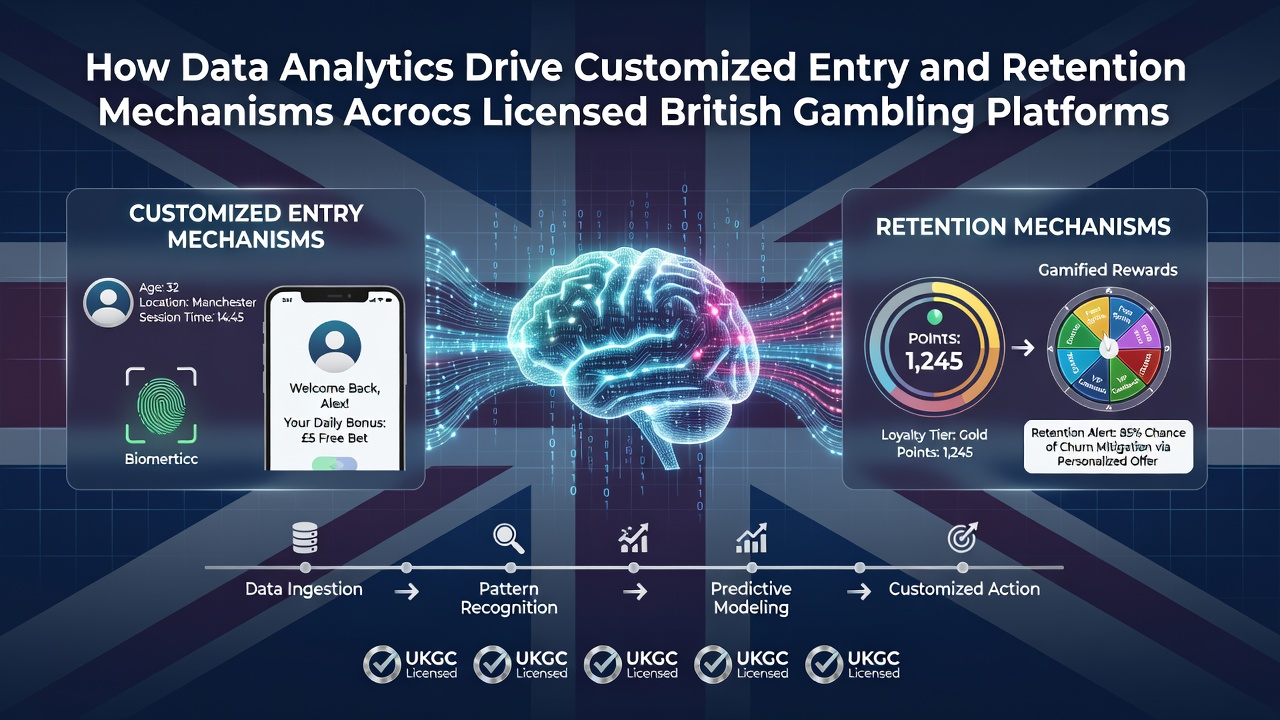
British gambling operators have integrated data analytics into their core operations to shape how users first engage with platforms and how they remain active over time. These systems collect information from registration details, deposit patterns, game selections, and session durations, then apply algorithms that generate individualized entry offers and ongoing incentives. As of June 2026, major licensed sites process millions of data points daily to adjust welcome sequences and loyalty structures in real time.Data Collection and Segmentation Foundations
Operators gather structured and unstructured data from multiple touchpoints including device type, location signals, preferred bet categories, and response rates to previous communications. Advanced clustering techniques divide users into groups based on predicted lifetime value, risk tolerance, and engagement velocity. This segmentation allows platforms to route new accounts toward specific onboarding paths rather than applying uniform welcome packages across the board.
Research from the American Gaming Association shows similar segmentation models in other regulated markets produce measurable differences in first-month activity levels when offers align with observed user behavior. British platforms apply comparable logic while staying within local licensing frameworks that emphasize responsible marketing practices.
Entry Mechanisms Shaped by Predictive Modeling
New users encounter entry points calibrated through machine learning models that forecast which combination of deposit match, free spin allocation, or risk-free bet will prompt an initial transaction. Platforms test multiple offer variants on small cohorts before scaling successful combinations to matching segments. Timing plays a role as well, with some systems delaying certain incentives until a user completes a set number of sessions or reaches a specific engagement threshold.
One study from the University of Sydney's Gambling Treatment and Research Clinic examined how personalized onboarding sequences affect conversion rates across digital gambling environments. Findings indicated that tailoring the sequence of offers to individual risk profiles and game preferences increased both initial deposits and early retention compared with static campaigns.
Retention Systems and Continuous Optimization
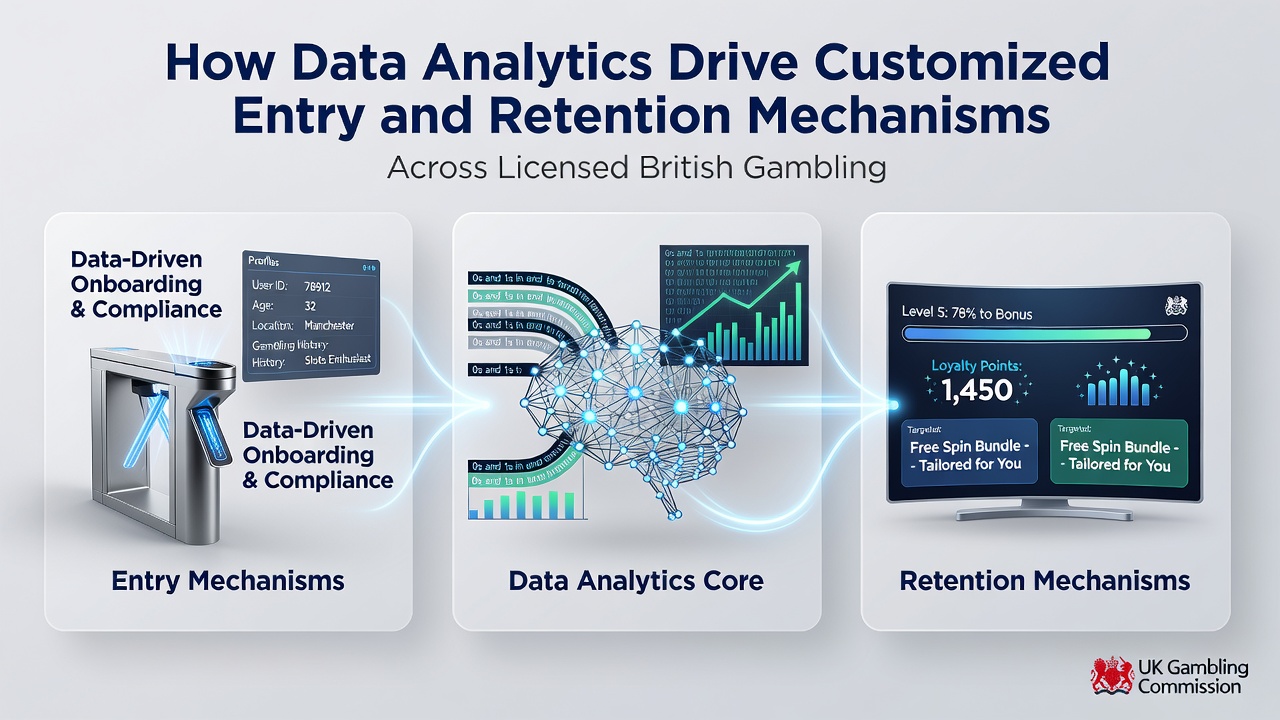
Once users pass the entry phase, analytics shift focus to sustaining activity through dynamic reward cycles. Systems monitor behavioral drift, such as changes in stake size or session frequency, and trigger interventions like targeted price enhancements or deposit-free trials calibrated to the individual's historical patterns. These adjustments occur without manual intervention because models retrain on fresh data streams every few hours.
Platforms also employ survival analysis techniques to predict churn windows for different segments. When a user's activity curve begins to flatten, the system activates retention triggers such as customized reload structures or casino credits tied to previously played titles. This approach replaces broad monthly promotions with micro-targeted actions that align more closely with each account's trajectory.
Regulatory Context and Technical Implementation
Licensed British operators must balance personalization goals with strict advertising and responsible gambling rules. Analytics platforms incorporate compliance layers that flag accounts showing signs of harmful play and automatically adjust or suppress certain offers. Data pipelines feed into both marketing engines and responsible gambling monitoring tools, creating shared oversight mechanisms.
Technical stacks typically combine real-time event streaming with batch processing for deeper cohort analysis. Cloud-based infrastructure supports the scale required to handle peak periods such as major football weekends or tennis tournaments in June 2026, when user volumes spike and models must recalibrate offers within minutes.
Cross-Channel Personalization Examples
Some operators link sports betting and casino data streams to create unified user profiles. A user who places frequent accumulator bets on weekends might receive casino incentives timed for weekday evenings when sports activity drops. Conversely, high-volume slot players may see sports-related entry offers during major events. These connections rely on unified data lakes that merge transaction histories across verticals while maintaining separate risk models for each product type.
External benchmarks from the Australian Gambling Research Centre highlight how integrated data environments improve the precision of retention interventions across multi-product operators. British platforms have adopted parallel architectures to achieve similar coordination between verticals.
Future Trajectories in Analytics-Driven Loyalty
Continued advances in reinforcement learning allow systems to experiment with offer structures that adapt based on immediate user feedback rather than historical averages. Early implementations in June 2026 already show platforms running thousands of simultaneous micro-tests to refine which variables most strongly influence continued play. These developments point toward increasingly granular customization while operators maintain records of all decision logic for audit purposes.
Conclusion
Data analytics now underpin the majority of entry and retention decisions across licensed British gambling platforms. Through segmentation, predictive modeling, and real-time optimization, operators create differentiated experiences that respond to individual patterns without violating regulatory boundaries. The infrastructure supporting these mechanisms continues to evolve, incorporating fresh data sources and compliance safeguards as user volumes and product complexity grow.