Adapting Strategies: UK Bookmakers' Promo Changes Tied to Seasonal Sports Cycles
Written by Wendy Otto · Jul 29, 2026
Adapting Strategies: UK Bookmakers' Promo Changes Tied to Seasonal Sports Cycles
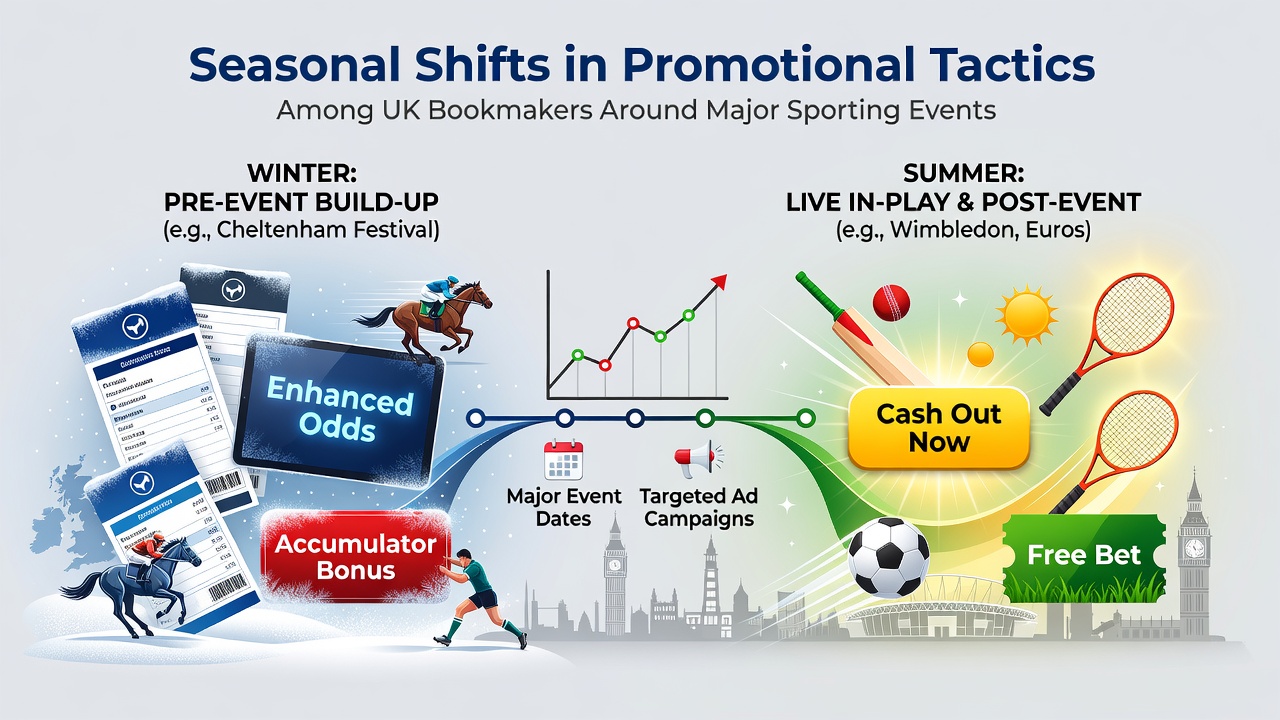
UK bookmakers coordinate promotional adjustments with the annual calendar of major sporting events, and these patterns emerge clearly when observers track activity across football leagues, tennis tournaments, and horse racing fixtures. Data from industry monitoring services shows that free bet volumes increase by measurable margins during peak periods such as the Premier League winter months, while odds boosts appear more frequently ahead of summer tennis events like Wimbledon.
Those who study betting operator behaviour note that the timing of these tactics aligns with predictable shifts in consumer engagement. When football fixtures dominate the schedule, operators often emphasise accumulator insurance and matched bet incentives, whereas tennis grand slams coincide with enhanced price offers on individual matches. This rotation allows firms to maintain relevance as audience attention moves between sports.
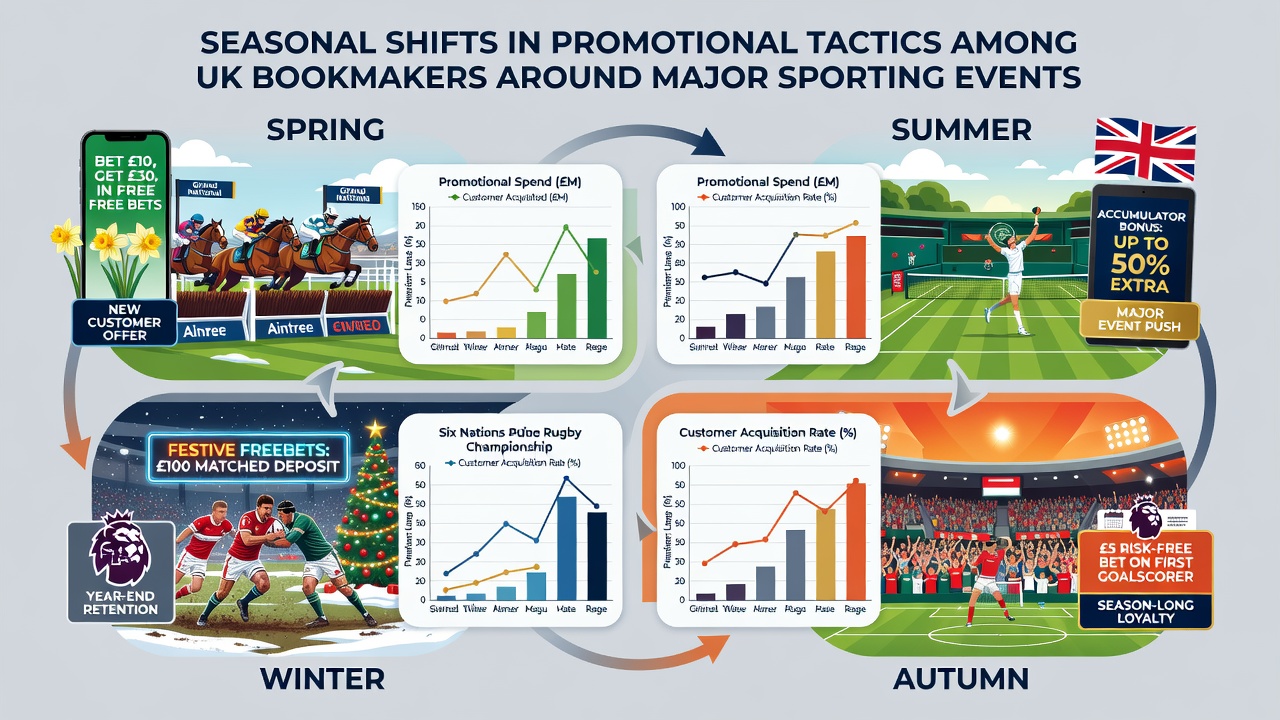
Football Season Peaks and Winter Promotions
During the core months of the domestic football calendar operators expand free bet allocations and introduce temporary price pumps on popular leagues. Figures released by European betting trade bodies indicate that December campaigns frequently feature reload incentives tied to midweek fixtures, and these runs continue through the January transfer window when fixture congestion peaks. Observers note that accumulator insurance products gain prominence at these times because multi-leg bets attract higher volumes of participation.
Research compiled by the European Gaming and Betting Association reveals that winter months generate the highest proportion of sports-related sign-up activity for UK-licensed platforms. Operators respond by layering short-term odds boosts onto existing welcome offers, creating sequences that encourage repeat deposits without extending beyond regulatory playthrough limits.
Spring Transitions and Tennis Grand Slams
As the football season winds down, promotional emphasis shifts toward tennis and early-season horse racing. Spring campaigns typically highlight individual match boosts and no-deposit trials that allow users to test enhanced odds on grass-court events. Data collected across multiple operators demonstrates that these offers appear in concentrated bursts around the French Open and subsequent Wimbledon preparations, rather than as continuous year-round features.
Industry reports further indicate that spring reload cycles often incorporate casino crossovers, where sports wager credits convert into slot trials once certain thresholds are met. This blending reflects broader patterns documented in studies from the Victorian Responsible Gambling Foundation, which tracked how seasonal sports interest influences the distribution of deposit-free incentives across both betting and gaming verticals.
Summer Adjustments and Off-Season Planning
July 2026 presents a clear example of how operators navigate quieter periods between major tournaments. With the European club season on hiatus and limited international fixtures scheduled, several platforms redirect resources toward pre-season football friendlies and lower-profile racing meetings. Promotional calendars from that month show an uptick in timed free plays and evening price pumps designed to sustain engagement when natural betting volume dips.
Those tracking operator behaviour observe that summer tactics frequently include extended playthrough windows on casino trials to compensate for reduced sports traffic. This approach allows firms to maintain revenue streams while preparing for the autumn return of domestic leagues, and it aligns with patterns identified in academic analyses of betting seasonality conducted by Australian research institutions.
Autumn Racing Cycles and Year-End Campaigns
Autumn brings renewed focus on horse racing festivals and teh opening weeks of new football seasons. Operators typically reintroduce accumulator insurance alongside boosted odds on championship contenders, creating layered incentives that bridge the gap between summer lulls and winter intensity. Monitoring data indicates that these autumn campaigns often feature the longest-running reload sequences of the year, as operators seek to lock in user retention ahead of the holiday period.
Cross-promotional activity also intensifies during this window, with sports bonuses feeding into casino starters at higher rates than in other quarters. External studies confirm that such sequencing helps operators balance regulatory requirements while responding to the distinct engagement rhythms of different sports audiences.
Conclusion
Seasonal shifts in promotional tactics among UK bookmakers reflect structured responses to the annual sports calendar rather than random variation. By aligning free bets, odds boosts, and reload incentives with the peaks and troughs of football, tennis, and racing events, operators maintain consistent visibility across changing audience interests. Available data and regulatory-adjacent research continue to document these rotations, providing a factual record of how promotional calendars evolve in tandem with sporting schedules.